

Designing the Perfect Look for the Hospitality Industry
Choose hospitality workwear that reflects your brand, supports daily performance, and lasts longer. Expert insight on custom and staff uniforms in Ireland
Written by Atire Branded Workwear Expert • Updated February 20, 2026
Quick Facts
-
- Hospitality workwear influences first impressions immediately
- Comfortable uniforms improve staff performance
- Custom uniforms help reinforce brand identity
- Quality fabrics reduce replacement costs
- Hospitality workwear influences first impressions immediately
Atire supplies staff uniforms in Ireland tailored for hospitality businesses. In a busy hotel or restaurant, there are a million things to worry about, so uniforms often fly under the radar until they become a problem. But when a team looks mismatched or the gear starts looking worn out, it impacts how guests see your brand. A great uniform does a lot of the heavy lifting for your brand. It gives guests confidence the moment they arrive and shows them they’re in good hands.
Why Your Team’s Appearance is Your Strongest Brand Asset
Guests notice everything. The lighting. The cleanliness. The way staff present themselves.
Uniforms are part of that visual experience. When they look sharp and consistent, the whole space feels more put together.
Well designed workplace uniforms help to:
- Make staff easy to identify
- Create consistency across departments
- Reflect your brand values
- Support hygiene and safety standards
It is not about being flashy. It is about being intentional.
Aligning Workplace Uniforms With Your Brand Identity
Before choosing colours or fabrics, think about the atmosphere you want to create.
Is your hotel formal and elegant? Is your café relaxed and creative? Is your restaurant modern and minimalist?
Your uniforms should match that tone.
A boutique hotel might lean toward tailored jackets and soft neutral colours. A lively bar might choose darker tones with practical aprons. There is no single correct look. The key is alignment.
When every department looks connected, the guest experience feels smoother.
Comfort and Functionality in Modern Hospitality Settings
Hospitality is active work. Staff move constantly. They carry trays, clean rooms, check in guests, and solve problems on the spot.
If a uniform feels stiff or heavy, it quickly becomes a distraction.
Good hospitality workwear should offer:
- Breathable materials
- Stretch for movement
- Lightweight construction
- Durable stitching
- Easy care fabrics
When staff feel comfortable, they focus on service instead of adjusting their clothes.
For businesses sourcing staff uniforms in Ireland, layering options can also help. Indoor and outdoor temperatures can vary throughout the day. Versatile pieces make shifts easier.
Why Custom Uniforms Make a Difference
Off the shelf uniforms can work, but they rarely feel unique.
Custom uniforms give you control over the details. Those small details shape how your brand is perceived.
Options may include:
- Embroidered logos
- Subtle colour accents
- Branded buttons
- Role specific designs
- Name embroidery
These small details tie everything together and make it easier for guests to quickly spot who can help them.
Custom hospitality workwear shows that your business has thought carefully about presentation. That attention to detail often carries through into service.
Different Roles, Different Needs
A single uniform design rarely suits every department. Function should guide your decisions.
Front of House
Front of house teams are the first people guests interact with, so their appearance sets the tone from the start.
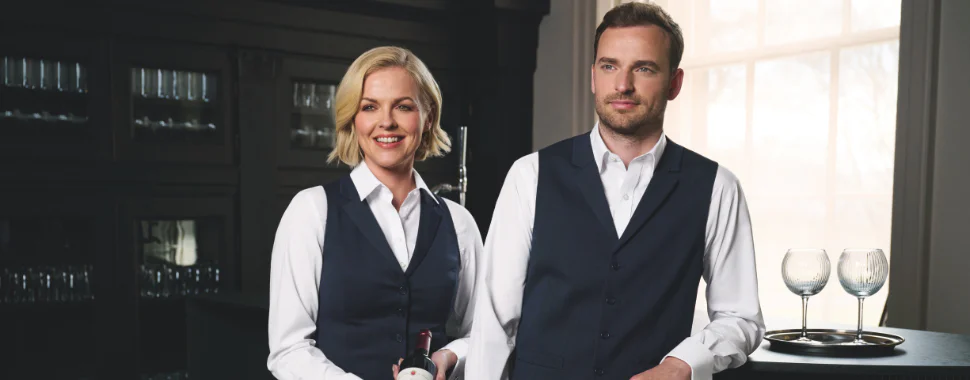
Many businesses opt for tailored jackets, clean cut shirts, or coordinated pieces that look sharp without feeling stiff.
Food and Beverage Teams
Bar and restaurant teams are always on the move and regularly handling drinks and plates.
Fabrics with some stretch, sturdy aprons, and materials that handle marks easily tend to perform best.
Kitchen Staff
In the kitchen, safety always comes first.
Choose breathable materials that cope with heat and wash easily, along with secure closures and practical shapes that do not get in the way.
Housekeeping
For housekeeping staff, comfort usually matters more than anything else.
Light fabrics and easy fitting trousers make bending, lifting, and long shifts much more manageable.
When uniforms reflect what each role actually involves, people simply work more comfortably and efficiently.
Fabric Quality Is an Investment
Cheap fabrics might look good at first, but they fade, shrink, or lose their shape after a few washes. You end up replacing uniforms more often, and that drives up your costs. Quality workwear on the other hand, keeps its shape and stays sharp, even after constant washing. Your team looks professional for longer.
Blended fabrics usually hit the sweet spot: they’re tough, but still soft and flexible. Always ask for fabric samples you can actually touch and try on before you buy. Seeing and feeling the material in person helps you avoid surprises.
The Importance of Fit
Even the best-looking uniform falls flat if it doesn’t fit right. When it’s too loose, it looks sloppy. Too tight, and your staff can’t move or stay comfortable. Offer a wide range of sizes, and if you can, arrange fittings so people can try things on. When your team feels good in what they’re wearing, it shows good posture, more confidence, better energy.
Choosing Staff Uniforms in Ireland That Last
Designing nice uniforms is only step one. Keeping that same quality, wash after wash, is the real test. A good supplier gets how tough hospitality work is. They know uniforms have to look sharp and stand up to long, busy shifts.
If you’re sourcing uniforms in Ireland, Atire works directly with hospitality teams to create gear that’s tough, comfortable, and stays on-brand. Teaming up with a specialist takes the guesswork out of choosing workwear that supports your staff and fits your business.
Common Pitfalls to Avoid
Most uniform problems start with rushing the process. Here’s what trips people up:
– Picking style over practicality
– Ignoring what staff actually want or need
– Skipping sample tests
– Forgetting about long-term durability
– Letting uniforms get dated and never updating them
You don’t need to change uniforms all the time, but it pays to review them now and then to make sure they still fit your brand.
Reviewing and Updating Your Workplace Uniform Strategy
Uniforms might not always grab attention, but they shape first impressions, help your team do their job, and show off your brand. The goal? Uniforms that look sharp, feel good, and hold up to real work.
When you get those right, everything clicks. Your team looks confident. Guests feel at ease. Your brand comes through loud and clear.
If you’re rethinking your uniforms or planning an upgrade, Atire offers custom workwear and staff uniforms in Ireland, all designed for hospitality.
Frequently Asked Questions
What fabric lasts longest for hospitality uniforms?
Blended fabrics like poly cotton usually last longer because they handle frequent washing without losing shape. Atire supplies hospitality workwear made for heavy daily use in hotels and restaurants.
How many uniforms does each staff member actually need?
Most teams give staff three sets so there is always a clean one ready for the next shift. Atire helps businesses across Ireland plan and supply the right number of staff uniforms.
Is it better to buy custom uniforms for a hotel?
Custom uniforms help your team look consistent and match your brand style. Atire provides custom uniforms with logo embroidery tailored for hospitality settings.
What do chefs and kitchen staff need in their uniforms?
Kitchen staff need breathable jackets, easy care fabrics, and safe non slip footwear. Atire offers hospitality workwear designed specifically for busy kitchen environments.
Where do most companies put their logo on a uniform?
Most businesses place the logo on the left chest because it looks neat and easy to see. Atire provides embroidery services for staff uniforms in Ireland with clear and durable stitching.


Stay informed with Atire
Get the latest insights on workplace uniforms, industry trends, and sustainable design strategies