

Manage Your Uniform Spend via Online Portals
Ensure your business takes control of uniform spend. Request a consultation with Atire to explore our online portal and streamline your workwear ordering today
Written by Atire Branded Workwear Expert • Updated March 23, 2026
Quick Facts
-
- A uniform management portal is a web-based system that lets businesses control all staff workwear ordering in one place
- Portals reduce unauthorised purchases and keep branding consistent across every site and department
- Managers can set spend limits, assign garments by role, and check order history at any time
- Staff can order their own items within pre-approved limits, which takes the pressure off HR and procurement
- Atire’s portal, is purpose-built for Irish businesses across aviation, hospitality, logistics, and more
Someone from the Operations team places an order without looping in procurement. A new starter arrives on Monday without the right uniform because their start date never got flagged on time. By the end of the quarter, the uniform budget is gone, and when finance comes looking for answers, three people point in three different directions.
Nobody is trying to cause problems. The process just was not built to handle the volume. When you are managing workwear across multiple departments, sites, or shift patterns, doing it manually is always going to catch up with you eventually.
That is where an online uniform portal comes in.
Why Uniform Spend Gets Out of Control
Nobody sits down and decides to mismanage a uniform budget. It happens gradually.
It usually starts small. A manager sends a quick email to the supplier because they need three shirts for a new hire. Someone else does the same thing the following week. Before long, you have six different people placing orders through six different channels. Nobody has a clear picture of what has been spent, and the branding on the new batch does not quite match what was ordered six months ago.
For smaller teams, this is manageable. For a business with 100 staff or more, it becomes a genuine operational headache, one that costs more than most finance teams realise until they actually sit down and look at the numbers.
What a Uniform Portal Actually Does
Think of it as giving your entire workwear process a single front door.
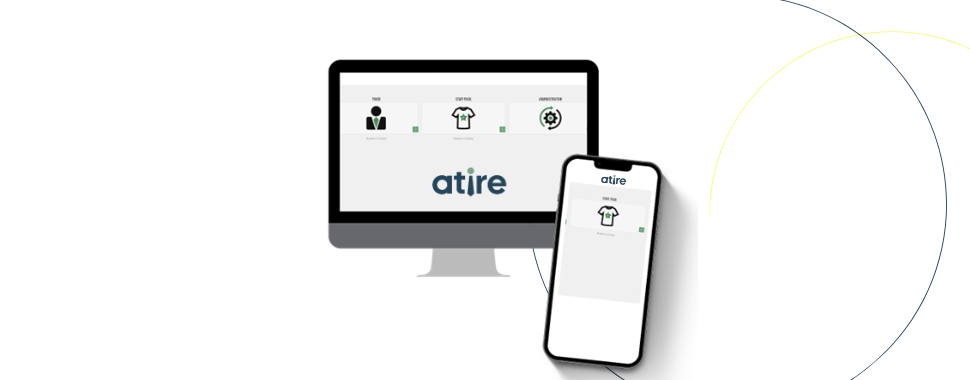
Instead of orders coming in through emails, phone calls, and the occasional walk-in request, everything goes through one system. Staff see only the garments relevant to their role. Managers set budgets in advance. Orders are tracked automatically. And when someone asks where the uniform spending went this quarter, the answer is two clicks away.
The features that make the biggest practical difference are:
Everyone only sees what they should be ordering
A warehouse operative does not need to see the front-of-house range. A receptionist does not need access to PPE. Role-based ordering removes a surprising number of mistakes before they happen.
Budgets are enforced before the order goes through, not after
You set an annual allowance per employee or per department, and the system flags it when someone is approaching their limit. Finance stops finding out about overspend at the end of the month.
Every order is on record
Who ordered it, what they ordered, when it was placed, and what it cost. Reorders are simple. Disputes are easy to resolve. The audit trail is there whether you need it or not.
New starters do not fall through the cracks
Atire’s staff pack service connects directly with the portal, so when someone new joins, their uniform pack can be sorted by role and on its way before their first day. It is one less thing for HR to chase.
The Difference It Makes Day to Day
The teams that notice the biggest change are usually HR and procurement, because they are the ones who have been absorbing the workload of a broken process.
When staff can self-serve within pre-set limits, the requests stop landing in HR inboxes. When spend controls are built into the system, procurement stops firefighting at month-end. When every order is logged in one place, finance stops asking questions that nobody can answer.
The broader benefits tend to follow from there. Branding stays consistent because every garment comes from the same pre-approved catalogue with the same embroidery specs. Budgeting becomes more accurate because you have real data to work with. And scaling up, whether that means a new site or a seasonal hiring push, does not suddenly mean a spike in admin.
Who Gets the Most Out of a Uniform Portal
Any business managing workwear across multiple roles or locations will see a difference. But some industries feel the impact more sharply than others.
Aviation and airport operations
In aviation and airport operations, compliant garments are not optional. Airside staff need specific items that meet CAA and DAA requirements, and a portal makes sure only those items are available to order. One less compliance risk to manage.
Facilities management
In facilities management, the combination of high staff turnover and multi-site operations makes manual ordering a constant struggle. A portal lets each site order independently without losing central oversight.
Hospitality
In hospitality, the challenge is speed. Seasonal hiring means batches of new starters arriving at short notice. A portal makes it possible to get the right uniform to the right person quickly, without the usual back-and-forth.
Logistics and distribution
In logistics and distribution, you are dealing with hi-vis requirements, PPE compliance, and shift patterns that change regularly. A portal keeps all of that organised and gives you the records to prove it.
Construction and utilities
In construction and utilities, non-compliant garments are a safety issue, not just an admin one. A portal prevents staff from ordering items that do not meet the required standards.
What to Actually Look for When Comparing Portals
Not every system is worth the setup time. If you are weighing up options, the things that tend to matter most in practice are:
- Whether you can set different access levels for managers and staff
- Whether your branded garments are pre-loaded, so the catalogue reflects what you actually use
- Whether the embroidery and branding options are integrated, so what you order is what you receive
- Whether delivery is flexible enough for your setup, direct to staff, bulk to site, or both
It is also worth asking about end-of-life garments. Atire has a recycling scheme for workwear that has run its course, which matters if sustainability is part of your procurement policy.
And perhaps most importantly: is there a real person to call when the system does not have the answer? Self-service is great until it is not, and a portal backed by an account manager is a very different experience from one that leaves you waiting on a support ticket.
How Atire’s Portal Works in Practice
At Atire, we built our portal because we kept seeing the same problems come up across different businesses. Companies with the staff numbers and complexity to warrant a professional system, yet still manage it with nothing more than a spreadsheet and a supplier relationship.
The portal is used by businesses across Ireland in aviation, facilities management, manufacturing, logistics, and hospitality. Each client gets a catalogue built around their garments, their branding, and their role structure. Orders are tracked in one place. Embroidery is handled in-house at Atire’s Dublin and Newry facilities, which means the quality you see in the portal is the quality that shows up at the door.
What tends to surprise customers the most is that the portal does not replace the relationship. Atire clients still have a direct contact for anything the system cannot handle on its own. That matters more than most people expect.
Ready to get your uniform spending under control? Get in touch with Atire to see how the portal works for your team.
Frequently Asked Questions
What is a uniform management portal?
It is a web-based ordering system that lets businesses manage all staff workwear in one place, with role-based access, spend controls, and a full order history. Atire’s portal at myatire.ie is configured with your catalogue and branding before you go live, so your team can start ordering straight away.
How does a portal actually save money on uniforms?
By stopping the small leaks that add up over time: unauthorised purchases, duplicate orders, and over-ordering because nobody checked what was already in stock. Atire can set spending limits per person or per department so the budget stays where it should be throughout the year.
Can it handle more than one site?
Yes. Each location manager can place orders independently while staying within the limits set centrally. Atire works with businesses across Ireland from bases in Dublin and Newry, with delivery direct to staff or bulk to the site, depending on what works best.
Is it worth it for smaller teams?
The return is highest for teams of 50 or more, but any business with multiple departments or regular reorders will benefit from having one central system. It is worth a conversation with Atire to see whether it makes sense for your situation.
How long does setup take?
Most portals are up and running within a few weeks of an initial consultation, depending on how complex your catalogue and role structures are. Atire handles the full setup from start to finish.
What happens to old uniforms?
Branded workwear should be disposed of properly, especially when staff leave. Atire runs a garment recycling scheme, so end-of-life workwear is handled sustainably rather than just ending up in a skip.
Do I need a specialist Irish supplier for this?
Not necessarily, but there are real advantages to working with one supplier that manages both the portal and the branding in-house. It means fewer handoffs, more consistent quality, and a single point of contact when something needs sorting. Atire manages everything from portal setup to finished embroidery, all under one roof.


Stay informed with Atire
Get the latest insights on workplace uniforms, industry trends, and sustainable design strategies